

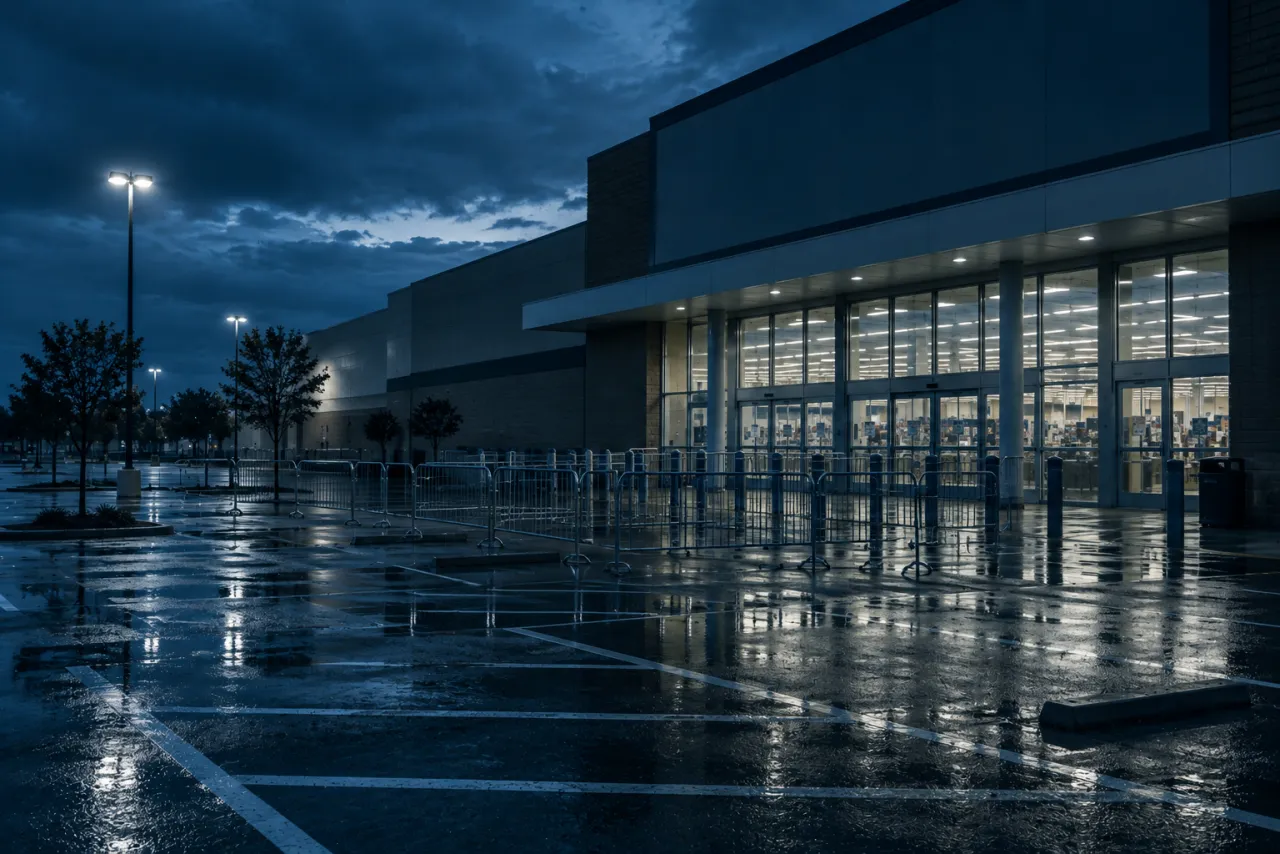
Monday, November 23, is the last full weekday before the holiday swallows the schedule: Thursday closes the store or thins it to a skeleton crew, and Friday opens it to the heaviest traffic of the year. Whatever needs a manager’s own eyes belongs on this day, not the next one.
Miss it here and the same check happens live on November 27, in front of a line at the registers, decided by whichever associate is standing closest when a customer asks. Four days is not much runway for a store that has not looked hard at its own aisles since October.
Monday: The Walk That Actually Gets Done
Every store manager plans to walk the floor before Thanksgiving week. The stores that are actually ready are the ones where it happens on Monday, not sometime this week. Price tags against the flyer. Promotional end caps that are supposed to be live by Wednesday. The aisle width in the two or three spots where a holiday line is going to form. None of this is new information to a manager who has run a November before. It is the difference between knowing it and having checked it, in writing, four days out.
The bigger the seasonal hiring push this year, the more this walk-through matters and the less it happens on its own. New associates who started in the last two weeks do not yet know which aisle bottlenecks every year, and a manager who assumes they do is the same manager surprised by a blocked aisle on Friday. The execution gap that seasonal hiring opens is at its widest right here, four days before the store needs those new hires to perform under real pressure.
The same walk should cover the physical plant, not just the shelves: cart count in the corrals, wheels that stick, doors that stick worse under holiday traffic, and whether the last reset left a display sitting somewhere it will not survive a crowd. None of it is dramatic. All of it is the kind of thing a manager notices on a quiet Monday and completely misses on a chaotic Friday.
Wednesday: The Last Delivery, the Last Chance
Wednesday’s truck is the last meaningful delivery before the weekend, and whatever does not make it onto the shelf by Wednesday night is effectively out of stock for Black Friday, whatever the inventory system says. The gap between what the warehouse shipped and what actually reaches the shelf tends to widen under holiday volume, not shrink, because the same staff pushing product are also covering registers and answering questions about the flyer.
Wednesday is also the day the schedule stops being a draft. Call-offs get backfilled today, not Friday morning, and the receiving team needs to know by Wednesday afternoon whether Thursday’s skeleton crew is enough to break down what just came off the truck before the weekend buries it.
The flyer itself is worth a second look on Wednesday specifically, because Black Friday pricing changes late and changes fast. A tag that was correct on Monday can be wrong by Wednesday afternoon if a promotion moved, and a wrong tag at the shelf edge on the day itself is the kind of thing a customer photographs before a manager ever sees it. Price accuracy across an ad cycle is not a once-a-season concern. It compounds every time the flyer changes, and the flyer changes most in this exact week.
Thanksgiving Night: Who Is Actually Watching the Store?
Whether the store stays closed through Thursday or opens for a few early evening hours, Thanksgiving night runs thin on supervision by design. A single keyholder, a contracted security guard, maybe two associates resetting pallets for the morning rush: that is the entire chain of command until sunrise.
The Morning Of: What Gets Checked Before the Doors Open
By the morning of November 27, there is no more time for a walk-through. There is only a short list a manager can actually finish in the last hour, short enough to survive contact with a line already forming in the parking lot:
- Every open register staffed and tested, not just scheduled
- The pickup counter staffed and stocked for the morning’s online orders, since a slow BOPIS counter becomes visible fastest on the one day everyone is watching the front of the store
- Queue paths mapped and clear, particularly anywhere a blocked aisle turns into a safety problem once a line forms behind it
- Doorway signage matching the layout inside, not the layout from last year’s reset
A list like this only holds if someone not on the schedule that morning has already confirmed each line item. A manager checking their own work under opening pressure is exactly the failure mode this week was supposed to prevent.
After the Rush: What the First Two Hours Prove
The two hours after doors open are the real test. Every item from the week’s checklist either holds under actual traffic or it does not, and the ones that fail are rarely the ones anyone worried about. It is usually the item nobody thought to write down.
A store that passed its Monday walk-through can still fail its first two hours on Friday, because a walk-through measures readiness and the first two hours measure behavior under load: how fast a stockout gets flagged, how long a customer waits at a dead register, whether the pickup counter keeps pace once the morning surge hits. Different questions, and only one of them gets answered before the doors open.
Whatever the first two hours reveal, most of it traces back to a decision made earlier in the week, not a decision made that morning. A stockout at 9 a.m. was usually a Wednesday delivery problem wearing a Friday costume.
None of this requires a standing program to begin. Ten anonymous visits across the stores you trust least, $7,500 all-in, and you go into the last week of November knowing which ones were ready and which ones only reported that they were.