

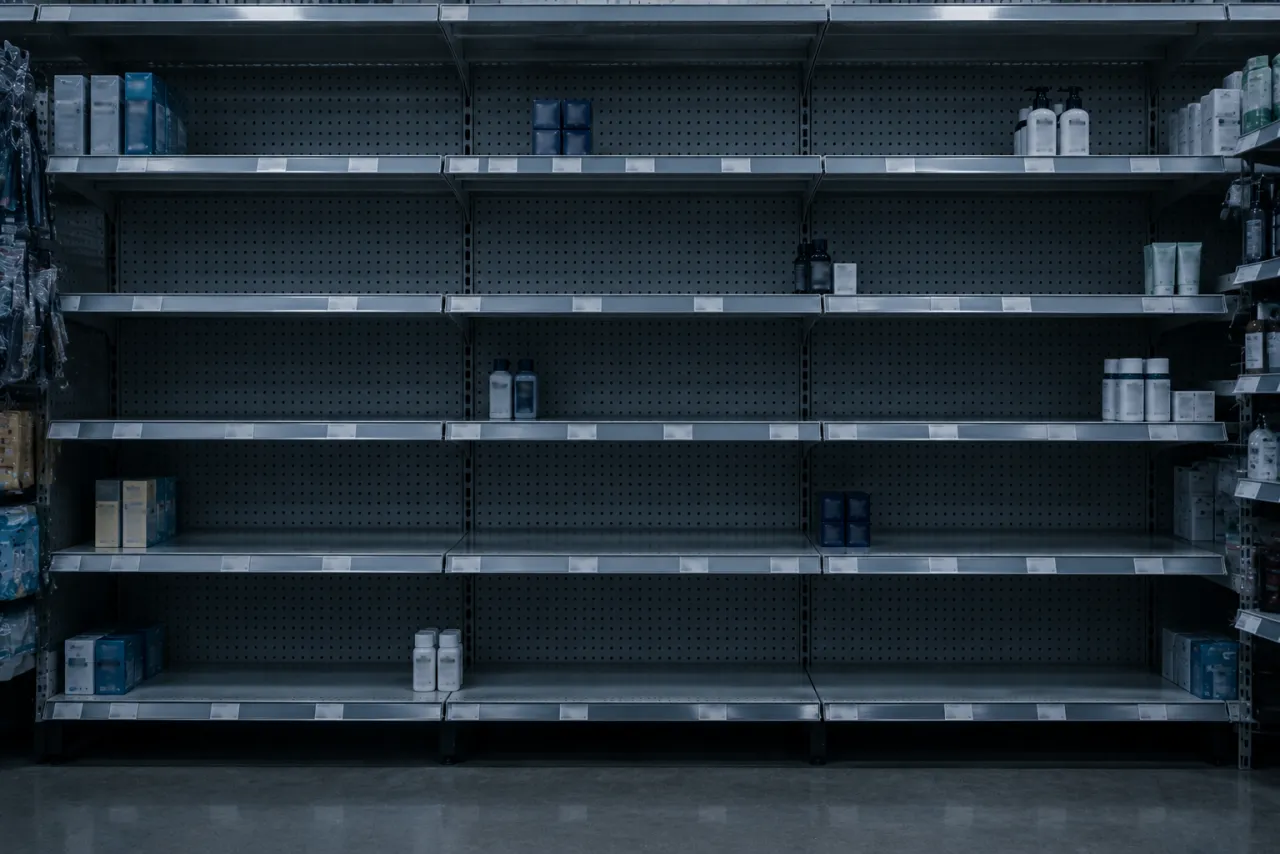
A route day covering three to six stores in one metro runs $1,200 to $1,750. The price only makes sense because a single auditor can walk several locations off the same distribution run in one working day, which is also why one working day can turn up two shelves that look nothing alike. Call them Store 12 and Store 31, forty minutes apart on the same route. Same case packs, same delivery window, same promotional ad running in both stores’ circular this week. One shelf is stacked to the header card. The other has a gap where the featured item should be.
The category manager who paid for that endcap does not know which store is which, and she does not care. She cares that the ad ran in both trade areas and the shelf only held in one of them. Three days into the promotion, the conversation is already sliding into blame: the distribution center says it shipped full allocation, the store says it never received enough cases. Both statements can be true. Neither one, on its own, explains what actually happened on the sales floor.
Store 31 ran the ad and still went bare
Store 31 set the endcap Monday morning, on schedule, matching the planogram sent down with the ad. By Thursday afternoon the shelf tag is still there, the price is correct, and the peg is empty. An auditor walking the store logs a zero facing count on the promoted item and photographs the gap the way it would document any out-of-stock. From the front of the store, this looks exactly like a shipment that came in short. It might be. It might also be a case that arrived Tuesday and never left the receiving dock.
The shelf on its own does not say which one happened. A single walk documents the outcome, not the cause, which is why comparing against another store on the same route matters more than any one visit does.
Forty minutes away, Store 12 held the shelf
Store 12 got the identical case pack, the identical delivery window, and the identical ad. Its shelf never had a gap. Holding the shelf does not make Store 12 the winner and Store 31 the loser, whatever a scorecard says about it this week. It means the one variable both stores share, the distribution center’s allocation, was not the deciding factor here, or at least not the only one. Something else moved differently between the two buildings.
At Store 12, the overnight crew broke down the delivery and pulled the promoted item to the floor before the doors opened Monday. At Store 31, the same delivery sat on a pallet in receiving until Wednesday, three days after the ad had already started running in every mailbox in town.
Check the back room before you check the DC
The fastest way to tell a supply failure from a store failure is to walk past the empty shelf and into receiving. If the case is sitting there unopened, the distribution center already did its job.
Is this a supply problem or a store problem?
A retail integrity audit that includes a backstock check answers the question a shelf photo alone cannot. Three outcomes are possible, and only one of them points at the warehouse. If the backroom holds a full, untouched case of the promoted item, the failure sits with the store. Maybe nobody worked the truck that morning. Maybe the planogram change never reached whoever built the display. If the backroom is as empty as the shelf, and the receiving log shows a case count under what the order guide called for, the failure sits with the distribution center. A fill rate is a fill rate, and a store cannot sell product it was never sent.
The third outcome shows up most often on a route day that covers several stores off the same run: a partial short. The DC sent less than a full allocation, and the store also failed to stretch what it had by pulling the remainder forward mid-week. Both things happened. Neither one alone explains the gap.
The honest answer is usually both
Peak weeks put pressure on both ends of the same chain at once. A distribution center juggling more ad commitments across more stores has more chances to ship a case short. A store juggling a busier floor and a leaner overnight crew has more chances to let a pallet sit past its build date. Neither pressure causes the other, but they land in the same week, on the same item, and often in the same building.
A gap like this shows up first as a share of shelf problem, and only a backroom check turns it into a supply answer or a store answer. Reading it as purely a supply failure lets a store off the hook for a reset that never got finished. Reading it as purely a store failure lets a distribution center keep shipping lean through the next ad cycle. The pattern is common enough during any high-volume week that it is worth reading alongside the broader peak execution rhythm building toward the season.
Telling supply pressure from store pressure across a full store list, not just two stores forty minutes apart, is what the ten standard integrity visits inside Signal Retail’s $7,500 pilot program are built to do. Full scope is on the pilot page.