

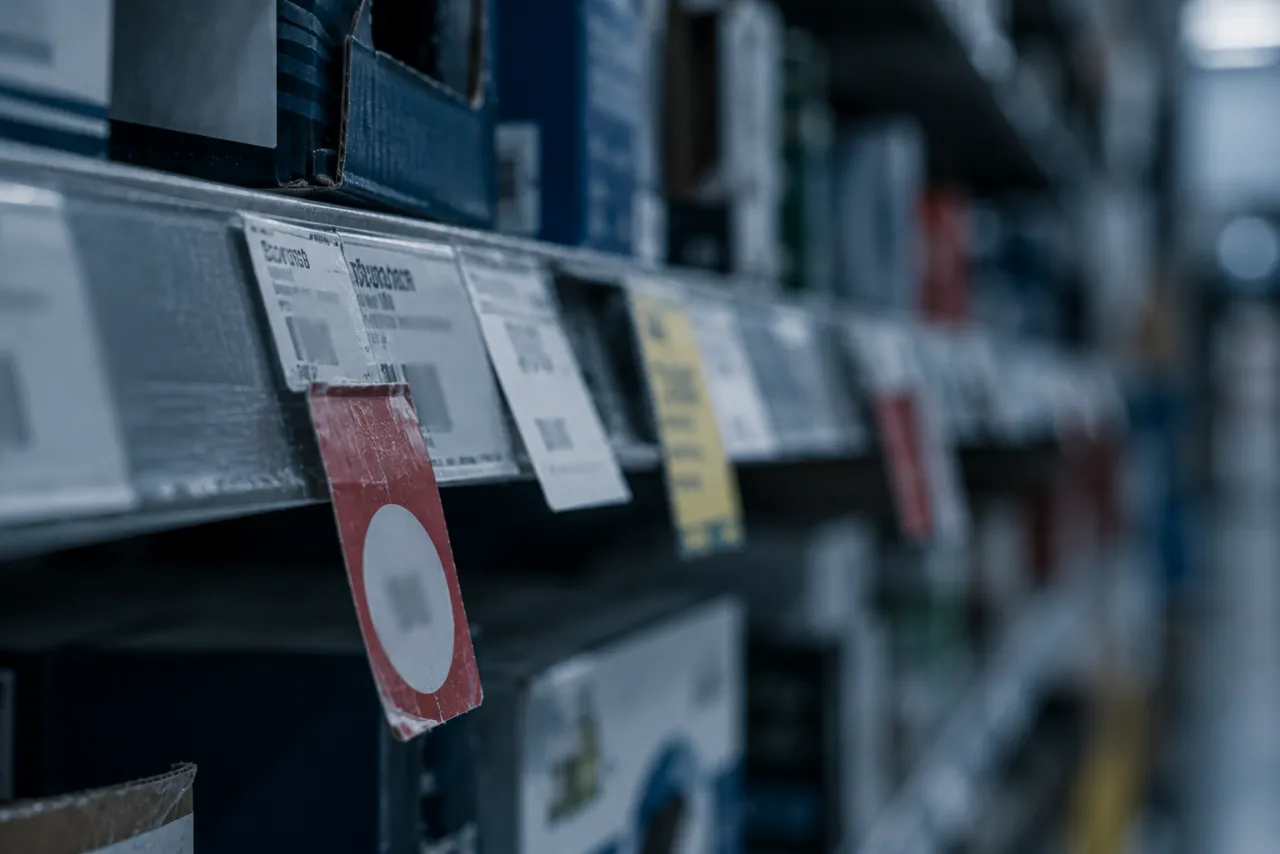
Price and tag accuracy breaks fastest in exactly the week most chains stop checking it: the week a new ad goes live.
Pull that ad now. Walk your weakest store against it, endcap by endcap, before a customer’s phone does the price check for you at the register.
The fix is not complicated. It is repetitive, and it has to happen the same way every week no matter who is working the shift. Five steps, done in order, catch almost everything that costs money before a customer or a regulator catches it instead.
Step One: Pull the Ad Before the Floor Does
Get a copy of the ad that goes live this week: every item, every price, every start and end date. Print it or pull it up on a phone. Do not rely on memory, and do not rely on what last cycle’s ad said, because item lists shift and dates move even when the layout looks familiar.
Cross-check the ad against the store’s own promotional calendar before anyone sets foot on the floor. A mismatch here means every tag downstream gets checked against the wrong document, and the whole walk turns into wasted time.
Name one person who owns this pull, by title, not by whoever happens to be free that morning. A rotating owner is how a chain ends up with three slightly different copies of the same ad circulating on three different phones, each one confidently wrong in a different place.
Step Two: Define What Counts as a Miss
Not every tag problem is the same problem, and treating them all the same is how the misses that matter get lost in the noise. Four conditions count as a miss:
- The shelf tag price does not match the ad price.
- The shelf tag price does not match what scans at the register.
- Promotional signage is missing, expired, or dated for a different cycle.
- Two tags exist for the same item and they disagree with each other.
Write these down before the walk starts. A walker deciding on the fly what counts as a miss will miss the ones that cost money.
Step Three: Walk the Register Against the Shelf
Scan every advertised item at the register, not just the two or three nearest the door. Compare what the screen charges against what the shelf tag says and against what the ad promised. Three numbers, one item, and they need to agree.
Endcaps deserve extra attention. They get re-priced by hand more often than a standard shelf run, and the usual reasons an end-cap promotion fails trace straight back to a tag nobody circled back to fix. If the internal team does not have the hours to run this check at every store on the list this week, a price, tag and promotion integrity audit runs the same structured comparison, priced per visit.
Keep a handful of receipts from the walk, not just the shelf photos. A line-item mismatch on a printed receipt is harder to argue with in a follow-up meeting than a verbal report, and it is the kind of documentation a receipt line-item verification add-on exists to produce when a chain wants a third party doing the comparing instead of its own staff.
Step Four: Fix It the Same Day You Find It
A miss found on Tuesday and corrected the following Monday has already cost a full week of wrong charges, wrong signage, or both. Fix it the day it is found. That means someone on site with the authority to reprint a tag and pull bad signage immediately, not a ticket that waits for the next scheduled maintenance pass.
For chains running the walk across multiple stores at once, a same-day escalation on any miss found mid-route keeps the fix from waiting on the full report. Signal Retail prices that as a standalone add-on at $75 per incident, because a finding is worth close to nothing if it sits unread until the route report is compiled a week later.
Build the check into a standing checklist rather than a one-time walk, so the next person running it does not have to reconstruct the process from memory. Photograph the corrected tag once it is up. A photo with a timestamp closes the loop the same way it opened it, and it is proof the fix happened this week instead of getting promised for next week.
Step Five: Track It the Same Way Every Week
Run the same four-condition check every week the ad changes, not just during the crunch before a major holiday. A pattern across weeks tells you whether the problem is one distracted associate or a structural gap in how price changes reach the floor.
For a chain with several stores in one metro, an outside team can run the same walk across all of them in a single route day, priced between $1,200 and $1,750 depending on the number of stops. Feed the results into whatever dashboard the ops team already checks weekly, so the tag walk becomes one more number in a routine instead of a special project that only happens when someone remembers to schedule it.
Chains that run this walk across ten stores instead of one usually want to know whether the pattern is a store problem or a company problem. That is what the aggregated findings summary in Signal Retail’s 10-Store Pilot is built to show, and the whole pilot runs $7,500 all-in.