

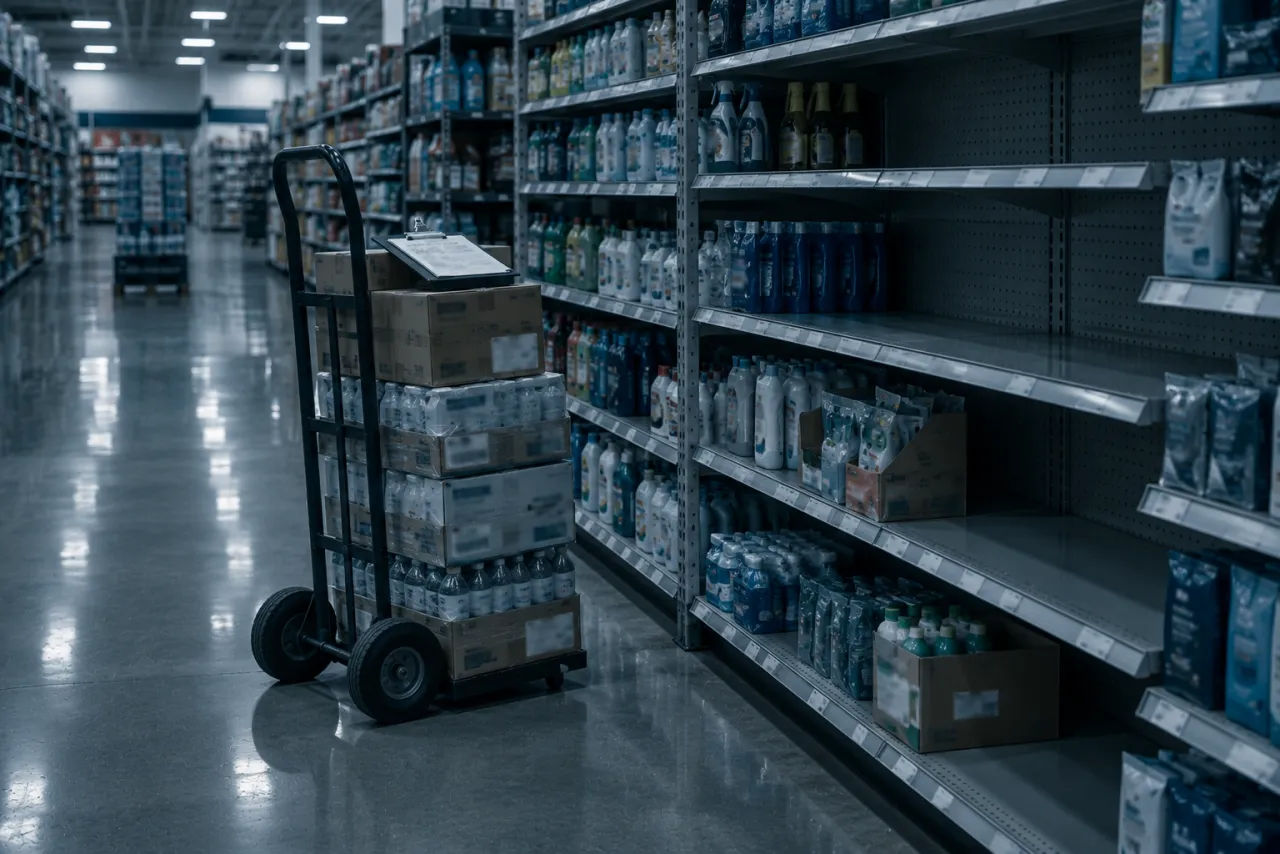
Third-party merchandisers are contracted professionals. They service the set on a published schedule, they know the planogram better than most of the staff working the aisle, and they photograph their own work before they leave. The brand is already paying for that visit, invoice and all. An auditor checking the same shelf a second time is being paid to confirm what the vendor’s own paperwork already confirmed, which is paying twice for the same information.
The rep’s photo lands in the vendor portal by mid-morning. The truck is three exits down the interstate before lunch, headed for the next stop on the route. No one touches that display again until the schedule calls for it, and on a slower route that can be three or four weeks out.
What a compliance photo actually proves
A merchandiser’s photo proves one thing cleanly: someone from the program stood in front of that shelf and did the work the contract describes. It is a record of attendance, timestamped and filed. It says nothing about the four hours of Saturday traffic that followed, the case of product a stockperson shoved onto the wrong peg at three, or the end cap a competitor’s rep quietly reset an hour later. Self-reported records carry the same structural limit everywhere they show up: the person filing the record has every reason to file a good one, and very little reason to go looking for the version that isn’t.
None of this requires bad faith. The photo is real. The reset happened. What it cannot do is describe a shelf at any moment other than the one it was taken.
Scale changes nothing about that limit. It just multiplies it. A national account team reviewing merchandiser photos from hundreds of stores in the same week is not looking at hundreds of shelves. It is looking at hundreds of five-minute windows, each one the best five minutes that shelf saw all month, curated by the person being scored on how good it looks.
Between the visit and the next customer
Shelves do not hold still. A planogram executed correctly at nine in the morning can be unrecognizable by the dinner rush: product pushed forward to hide a gap, secondary placement moved to make room for a promotional pallet, a tag that migrated during a Tuesday reset and never migrated back. None of that reaches the vendor’s file, because the vendor’s file closed the moment the rep drove away. Planogram drift is not something anyone documents on purpose. It happens in the space between two scheduled visits, and for most categories that space is where the shelf spends most of its life.
Picture one location instead of a portfolio: a strip-mall grocery store whose case gets reset on a Tuesday delivery. By Thursday, a distributor’s promotional pallet has eaten half the secondary display it was supposed to share. By the weekend, an out-of-stock on the anchor item has a stocker facing what’s left, front to back, so the gap doesn’t show from the main aisle. None of that reaches the merchandiser’s file, because none of it happened while the merchandiser was standing there.
What the rep is paid to do
A merchandising contract measures completed visits and executed resets. It was never written to measure what the shelf looks like at six o’clock on a Saturday.
The incentives, not the honesty, are the issue
Assume every party in this arrangement is doing exactly what they are supposed to do. The merchandiser is paid per completed visit and photographs the visit to prove it happened. The brand’s field team reviews those photos to confirm the contract is being honored and has no independent channel to check anything else. The store manager has no stake in flagging a rep’s work, since neither the labor nor the compliance belongs to their budget. Every incentive in that chain rewards documenting the moment of service. None of them reward finding out what the shelf looked like afterward, and that gap is why two honest records can disagree without anyone in the chain doing anything wrong.
So what does a second look actually add?
An auditor with no relationship to the vendor, the brand’s field team, or the store removes exactly one variable: the incentive to report well. Most CPG execution problems are not competence problems. They are visibility problems: hours when nobody with a stake in the outcome happens to be standing in the aisle. For a brand running a launch or a full-division reset, that gap is not a technicality. It is the difference between believing execution happened and knowing it did.
An unannounced visit, timestamped and scored against the same standard every time, does not replace the merchandiser’s photo. It answers a different set of questions instead:
- What the shelf looks like several hours after the scheduled service window, once a normal day of shopping has had time to work on it.
- Whether the secondary placement the brand paid for still exists, or a competing vendor’s rep quietly absorbed the space.
- Whether a customer walking in cold, with no knowledge of who serviced this aisle or when, would actually find what the plan promised.
None of that replaces the merchandiser’s record. It sits next to it, and the two together tell a brand something neither one tells alone.
For a CPG brand running a merchandising program across dozens or hundreds of doors, that second question is the one the current paperwork was never built to answer. CPG retail verification is built around it instead.