

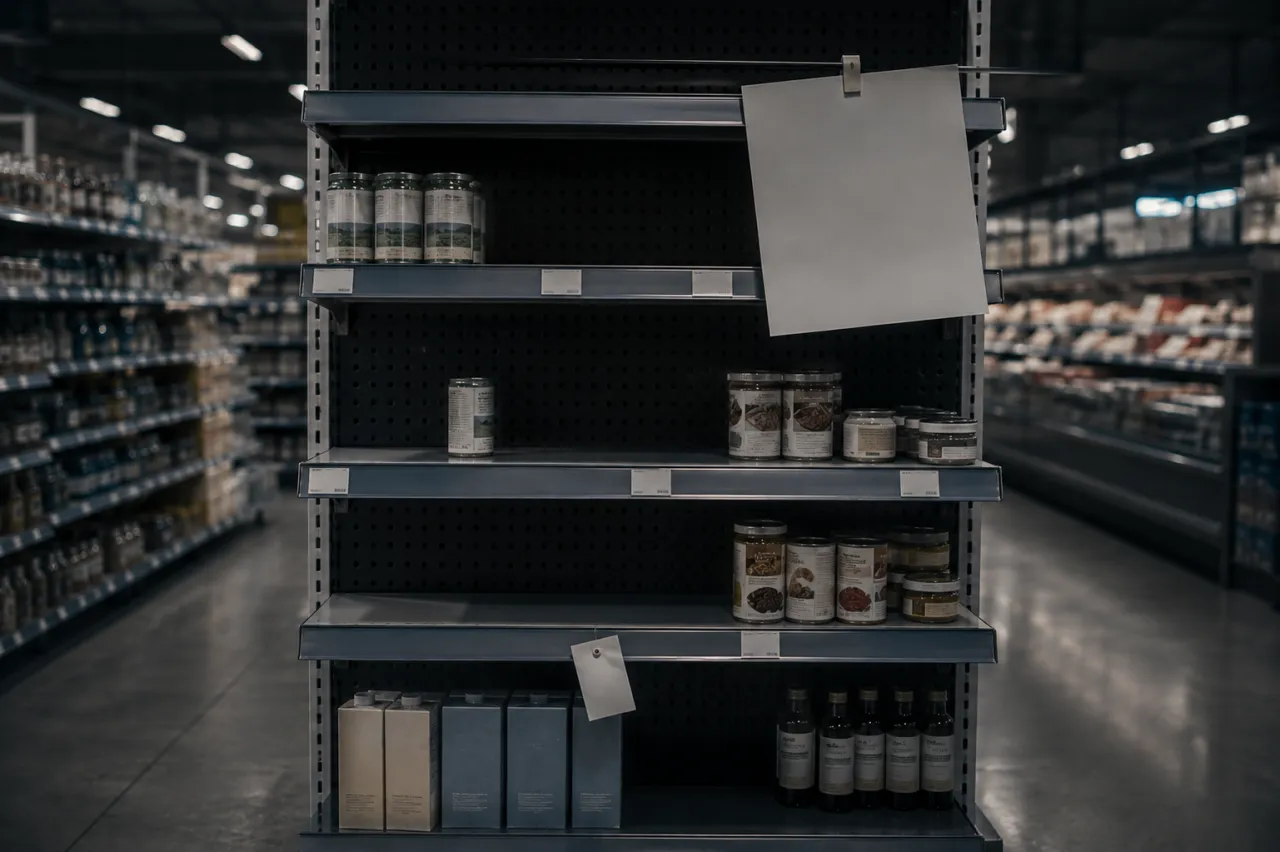
The promo window was fourteen days. The end cap went up on day four, lost its header sign on day seven, sold out on day nine, and was holding seasonal candy by day eleven. You paid for fourteen days. Shoppers got five.
Nothing about that sequence is unusual. An end cap promotion is a physical event executed by busy people in hundreds of buildings you do not control, and every step, from setup to signage to replenishment to teardown, is a chance for the plan to slip. The deduction, of course, arrives in full either way.
The brands that get their money’s worth do not run better post-mortems. They stop relying on post-mortems entirely and verify the promo while it is still running.
The End Cap Promotion Failure Timeline
Watch enough promotions underperform and the failures sort themselves into four moments. Each one happens at a different point in the window, which is exactly why a single check can never catch them all.
- Late setup. The display ships on time, then sits in receiving while the store works through a truck. Every day it waits is paid promotion time nobody sees, and if the ad circular drives traffic in the first three days, a late build misses the surge entirely.
- Wrong or missing signage. The end cap gets built, but the header card stays in the back room, the price sign is left over from the last program, or the offer is never posted. Shoppers see product with no reason to grab it. The velocity data will say the promotion did not work, because for the shopper it never existed.
- Mid-promo stock-outs. A good promo empties its own display, and an empty end cap is worse than none: prime real estate advertising something you cannot deliver. Refills depend on backroom inventory and on somebody noticing, and neither is guaranteed.
- Early teardown. End cap space is the most contested real estate in the store. A seasonal push or an early reset can quietly end your paid window days ahead of schedule, and nobody sends you a notice when it happens.
Why the Post-Mortem Is Too Late
The standard brand response is post-promotion analysis. Weeks after teardown, someone compares lift against forecast and labels the program a winner or a loser. The number is real. The explanation attached to it is a guess. A soft lift could be the price point, the creative, the weather, or the fact that a share of your displays never made it to the sales floor.
Worse, by the time the analysis lands there is nothing left to fix. The window is closed, the display is gone, and the evidence that would have supported a deduction dispute went out with the header card. Post-mortems produce lessons. They do not produce mid-flight saves or recovered trade spend.
Three Verification Windows: Start, Mid, and End
The alternative is to treat the promo like the time-boxed physical event it is, and to check it at the three moments where the timeline breaks.
- Start window, days one and two. Is the display built, in the contracted location, with the correct signage, and does the promoted price ring correctly at the register? A live receipt settles the last question beyond argument.
- Midpoint. Is the display still stocked, is the signage intact, and has anything from another category migrated onto your end cap? This is the window where stock-out saves actually happen.
- Final days. Is the display still standing through the end of the paid window? Photographs taken on the last scheduled days are what early-teardown conversations rest on.
Each check takes minutes per store. Run all three across even a sample of stores and you learn something a post-mortem never tells you: whether a failure is one store’s bad week or a systemic gap across the program.
Catch It, Prove It, Fix It Mid-Flight
A verification window only earns its keep if it triggers action. A day-two photo of an unbuilt display goes to your broker and the buyer while there are still twelve days worth saving. An empty display at midpoint becomes a replenishment call the same afternoon. An early teardown documented in the final window becomes an evidence-backed deduction conversation instead of a he-said, she-said.
This is exactly what our Price, Tag & Promotion Integrity Audit is built for: a trained, anonymous auditor visits during each window, documents the display with photos and timestamped notes, checks the register with a real purchase, and files a QA-reviewed, severity-coded report. Auditors observe and report only, so the store never behaves differently for the camera. Visits run $350 to $495 each. For brands running programs across an entire retailer fleet, our CPG retail verification service schedules those windows across markets, and how reporting works shows precisely what arrives in each report.
Verify Your Next Promo, Not Your Last One
Your promo calendar for next quarter already exists. Pick one program, pick ten stores, and put real verification windows on it. Either the execution holds, and you can defend that spend with confidence, or it breaks, and you catch it while the fix still matters.
A 10-store pilot costs $7,500 all-in: a checklist custom-built around your promo calendar, ten anonymous visits timed to your windows, photo-backed and severity-scored reports, an aggregated findings summary, and a one-hour executive debrief, all inside three to five weeks with no long-term commitment. Get in touch before the next window opens, and this time watch all fourteen days.