

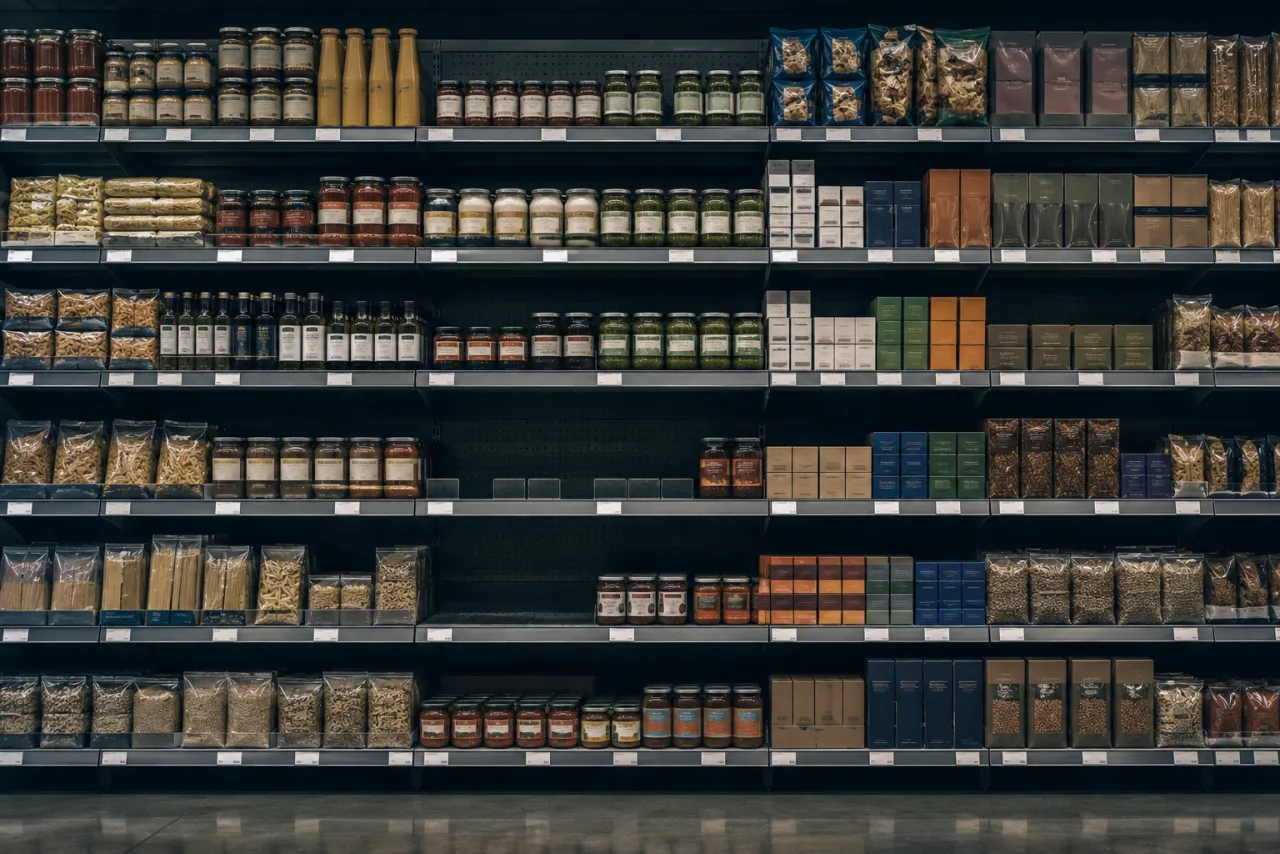
Your planogram promises four facings at eye level, second section in from the aisle entrance. In store 47, you have two facings on the bottom shelf, and the eye-level slot belongs to a competitor item that was not there last quarter.
Multiply that by a few hundred stores and share of shelf stops being a number on a slide. It becomes the quiet variable behind every velocity report you read. Brands negotiate hard for space, then measure it almost never. The retailer’s planogram file says one thing. The aisle says another. Only one of them sells product.
The good news is that measuring shelf reality is not complicated. It just has to be done in person, the same way, in every store, on a schedule that does not depend on anyone with a reason to round up.
Why the Shelf Drifts From the Planogram
Resets happen on a calendar. Drift starts the next morning. An overnight crew fills a void with whatever is closest in the backroom. A store manager flexes space to cover a local out-of-stock. A new item gets cut in and every neighbor loses a facing to make room. None of these decisions is recorded anywhere, none of them is malicious, and every one of them moves your share of shelf without a single meeting.
The planogram file at headquarters keeps saying four facings the entire time. That is why any measurement plan that relies on the retailer’s own records is really measuring intent, not reality.
How to Measure Share of Shelf in the Real World
You do not need scanners or shelf cameras to get a trustworthy number. You need a simple protocol, applied identically in every store. Consistency beats sophistication every time.
- Define the section once. Decide exactly what counts before anyone enters a store: which aisle, which category boundaries, whether secondary displays are in or out. Ambiguity here quietly ruins every trend line that follows.
- Count facings, not SKUs. A facing is one unit visible at the front of the shelf. Your share is your facings divided by total facings in the defined section. It is the number the shopper’s eye actually experiences.
- Photograph the whole section. One wide shot of the full set, then close-ups of your items and tags. A photo lets anyone re-count later and settles disputes before they start.
- Record position, not just count. Two facings at eye level and two on the bottom shelf are the same share and a very different business. Note the shelf level every time.
- Hold the protocol steady. Same section definition, same counting rule, same week of the month across stores. A method that drifts produces trends that mean nothing.
A facing count without a photo is an opinion. A facing count with a timestamped photo is a record. Build the habit of never reporting one without the other.
Watch for Competitor Creep
Nobody at the retailer decides to hand your space to a competitor. It happens one small, reasonable decision at a time: a cut-in here, an extra facing filling your void there, a wobbler that migrates into your section and never leaves. By the next reset, the competitor’s expanded set is the incumbent, and you are the one asking for a change.
The defense is simply to count competitor facings during the same visits, with the same photos. Creep that takes months to happen takes one photo series to prove. When the pattern crosses from one store to many, a dedicated Competitor Intelligence Visit can map exactly what the other brand is winning, where, and how.
Photos Turn a Complaint Into a Conversation
Walking into a line review with “we believe we are underspaced” gets you sympathy. Walking in with side-by-side evidence, contracted facings against actual facings, photographed across a dozen stores in the same week, gets you a planning conversation. Evidence de-personalizes the discussion: no one has to be wrong, the shelf just has to match the agreement.
Independence matters here more than most brands expect. When your own rep counts your own facings, a buyer hears advocacy. When a trained, anonymous auditor with no stake in the category documents the section, the buyer sees data. That is the model behind our CPG retail verification program: auditors observe and report only, every finding is backed by a photo or timestamped note, and every report passes QA before delivery. You can see exactly what a finished report contains at how reporting works, and if shelf share is one piece of a wider execution question, our guide on how to audit retail execution covers the full checklist.
Start With a Baseline, Not an Argument
Before your next line review, get a real baseline: ten stores, one banner, one category, counted and photographed under a single protocol. You will either confirm the planogram is holding, which is worth knowing, or you will walk into the room with the strongest deck a brand can carry: photographs.
The 10-store pilot was built for exactly this question. For $7,500 all-in you get a custom checklist designed around your category, ten anonymous store visits, photo-backed reports scored by severity, an aggregated findings summary, and a one-hour executive debrief, completed in three to five weeks with no ongoing commitment. Talk with us and find out what your shelf really looks like before someone else tells you.